
Understanding Love Affairs and Marital Relationships Through Vedic Astrology: A Comprehensive Analysis of Pre and Post Marital Connections
Published 29 April 2026 · By OrbitVeda Editorial · Updated 29 April 2026
The intricate tapestry of human romantic relationships has fascinated astrologers for millennia, offering profound insights into the timing, nature, and outcomes of love connections both before and after marriage. While contemporary society often views love through the lens of personal choice and emotional compatibility, Vedic astrology reveals that these connections are deeply encoded within the celestial blueprint of an individual’s birth chart and divisional charts. The distinction between pre-marital romance that culminates in marriage, post-marital love that flourishes within the marital bond, and secret extramarital affairs that threaten domestic stability lies in specific planetary combinations, house lordships, and their manifestations across the Rashi Chart (D1) and the Navamsa (D9). This comprehensive examination delves into the sophisticated astrological machinery governing romantic inclinations, the courage to pursue forbidden relationships, the intensity of desires, and the specific timing when these affairs become public knowledge or lead to marital dissolution.
Fundamental Principles of Love and Marriage in Vedic Astrology
The Pancham Bhava and Saptam Bhava Relationship in Birth Chart
The primary foundation for understanding romantic prospects begins with analyzing the relationship between the Pancham Bhava (fifth house) and the Saptam Bhava (seventh house) within the birth chart. The Panchamesh (fifth house lord) represents romance, creative expression, emotional attachment, and the capacity to experience love, while the Saptamesh (seventh house lord) governs marriage, legal partnerships, and committed relationships. When these two lords form any type of relationship in the birth chart, whether through Parivartana (exchange), Yuti (conjunction), or Drishti (mutual aspect), the native possesses the intrinsic potential for experiencing love affairs. This connection indicates that the individual will naturally encounter romantic feelings and may develop attachments that transcend mere physical attraction.
However, the presence of this connection solely in the birth chart without corroboration in divisional charts often suggests that while the native may experience intense romantic feelings before marriage, these feelings may not necessarily translate into matrimonial bonds. The birth chart provides the raw material of desire and romantic capability, but the Navamsa determines whether these energies manifest as marriage or remain as unfulfilled romantic episodes. Specifically, if the Panchamesh and Saptamesh of the birth chart aspect each other or conjoin, this creates the initial blueprint for love marriage, yet this blueprint requires validation through the Navamsa to indicate successful transformation of romance into matrimony.
The Navamsa Connection: When Love Transforms into Marriage
The Navamsa (D9 chart) holds supreme authority in matters pertaining to marriage, marital happiness, and the post-marital trajectory of relationships. When the birth chart shows a connection between the Panchamesh and Saptamesh, and this same connection appears in the Navamsa, this dual confirmation strongly indicates that a love affair predating marriage will successfully culminate in matrimonial union. The Navamsa acts as the fruit-bearing chart for marriage, and its validation of the birth chart’s romantic indications ensures that the relationship will withstand the transition from romance to committed partnership.
Conversely, when the birth chart indicates romantic potential through Pancham and Saptam lord connections, but the Navamsa shows no such relationship between these lords, the probability increases significantly that any pre-marital love affair will either dissolve before marriage or will not transform into a marital union. In such cases, the native may experience passionate romance, but circumstances, family opposition, or personal choices will prevent the conversion of this relationship into legal marriage. This distinction is crucial for astrologers to understand whether a client’s romantic involvement will have longevity or remain a transient emotional experience.
Navamsa Panchamesh and Saptamesh: Post-Marital Love Dynamics
A distinct scenario emerges when the Panchamesh and Saptamesh of the Navamsa itself form a relationship, regardless of the birth chart’s indications. This configuration suggests a fascinating trajectory where romance actually flourishes after the marriage has taken place. Rather than entering marriage based on pre-existing love, the native develops deep romantic attachment to their spouse following the wedding ceremonies. This post-marital romantic bonding can be equally intense and fulfilling as pre-marital love, sometimes even more so because it grows within the security of the marital framework.
However, if the birth chart shows connections between the fifth and seventh lords but the Navamsa remains silent regarding this relationship, this often indicates that whatever love existed before marriage may diminish significantly after the wedding. The romantic spark that initially brought the couple together may fade, leading to a marriage based on practical considerations rather than emotional passion. This pattern frequently results in the native feeling that the marriage lacks the romantic fulfillment they experienced during the courtship period, potentially creating dissatisfaction and the psychological groundwork for seeking romance outside the marriage.
Post-Marital Affairs and Secret Relationships
The Role of Tritiya Bhava: Courage and Audacity
When examining the potential for post-marital secret affairs and extramarital relationships, the analysis must extend beyond the fifth and seventh houses to incorporate the Tritiya Bhava (third house) and its lord the Tritiyesh. The third house represents courage, boldness, audacity, and the capacity to act against conventional norms and societal expectations. Without sufficient activation of this house, regardless of how strong the desire may be, the native will lack the necessary courage to pursue relationships outside the marital boundary.
The presence of Mars, Saturn, or Rahu in the third house creates a personality endowed with unconventional thinking and the boldness to challenge social norms. When these malefic planets receive beneficial aspects from Jupiter or Venus, this courage becomes purposeful and directed toward specific goals, including the pursuit of secret relationships. However, if the third house contains benefic planets like Jupiter or Venus and receives malefic aspects from Mars, Saturn, or Rahu, the native may experience interrupted courage or may attempt extramarital connections but fail due to hesitation, guilt, or external interference.
The strength of the Tritiyesh becomes paramount in determining the native’s capacity for sustained secretive behavior. When the third lord occupies its own sign, its exaltation sign, or aspects its own house, the native possesses unshakeable courage that supports clandestine actions regardless of potential consequences. This positioning grants the psychological fortitude to maintain secrecy, handle the stress of dual relationships, and navigate the complexities of extramarital involvement without succumbing to guilt or anxiety. If the Tritiyesh is weak, debilitated, or afflicted, the native may desire extramarital connections but will lack the sustained courage to pursue or maintain them.
Ashtam Bhava and Chaturth Bhava: The Psychology of Secret Pleasures
The second critical factor for understanding post-marital affairs involves analyzing the relationship between the Ashtam Bhava (eighth house) and the Chaturth Bhava (fourth house) or the Chaturthesh (fourth lord). The eighth house represents hidden matters, secrecy, taboo subjects, carnal pleasures, and activities that society considers illicit or forbidden. The fourth house represents domestic happiness, emotional security, family environment, and the native’s private inner world. When the Ashtamesh (eighth lord) influences the fourth house or the fourth lord through conjunction or aspect, it creates a psychological pattern where the native seeks secret pleasures, excitement, and emotional satisfaction outside the domestic sphere.
This Ashtam Chaturth connection suggests that the individual will pursue clandestine relationships to satisfy emotional or physical needs that are not met within the marriage. The native may have a perfectly functional domestic life but will still feel drawn toward secretive experiences that provide the thrill of the forbidden. This combination often indicates that the extramarital affair is not necessarily about finding a replacement spouse but about seeking the excitement and intensity that secrecy provides. The fourth house represents the heart’s contentment, and when the eighth lord influences it, the heart finds contentment in hidden, forbidden, or unconventional relationships.
Pap Kartari and Malefic Influences on the Third House
The specific condition of Pap Kartari (malefic hemmed) on the third house creates a unique dynamic for secret affairs. When the third house is flanked by malefic planets on both sides, or when malefic planets are approaching the third house from adjacent houses, this creates a binding energy that forces the native to act secretly. Saturn occupying the third house in its own sign while being hemmed by Ketu on one side and Venus with Moon on the other creates tremendous secretive courage. The native possesses the audacity to pursue forbidden relationships but is simultaneously bound by the fear of exposure, creating a tense psychological state of simultaneous courage and constraint.
Planetary Combinations for Desire and Attraction
Mars and Venus in Navamsa: The Cardinal Rule
Sexual desire and its intensity serve as the driving force behind extramarital relationships, and the most potent astrological indicator for this involves Mars and Venus forming a relationship specifically within the Navamsa chart. While Mars and Venus conjunctions or aspects in the birth chart may create domestic conflicts, arguments between spouses, and general marital discord, it is their connection in the D9 chart that truly indicates the capacity and inclination for extramarital affairs. This represents a cardinal rule that must never be overlooked in astrological analysis.
When Mars and Venus connect in the Navamsa through conjunction, mutual aspect, or even one-sided aspect, the native possesses intense sexual energy and desire that may seek expression outside marriage if other supporting factors are present. The strength of both planets becomes crucial here. If Mars occupies its exaltation sign (Makara) or own sign (Mesha or Vrishchika) while forming this relationship with Venus, the desire reaches excessive levels that the marital relationship alone may not satisfy. Similarly, if Venus occupies its own sign (Vrisha or Tula) or exaltation (Meena) while connected to Mars, the attraction toward physical pleasure becomes a dominant theme in the native’s post-marital life.
Saturn’s Restrictive Aspect on Venus
Saturn’s influence on Venus through aspect or conjunction creates a complex dynamic regarding desire fulfillment. When Saturn is strong (occupying its own sign Makara or Kumbha, or exaltation Tula) and influences Venus, it creates a scenario where desires remain unfulfilled or must be pursued secretively. Saturn brings restriction, delay, and secrecy, meaning the native cannot fulfill their desires openly within the marriage and must pursue them clandestinely.
If Saturn is weak or poorly placed while aspecting Venus, the restriction may manifest as the inability to fulfill desires at all, leading to frustration rather than secret affairs. However, when Saturn is strong and forms a Shashtashta (6/8) relationship with Venus or the seventh house, this indicates that while the desire for extramarital connection exists, Saturn will impose restrictions on its open expression, forcing the native to maintain absolute secrecy. This often results in long term hidden relationships that are carefully guarded and meticulously concealed from public view.
Ketu with Venus: Unconventional Desires
The presence of Ketu with Venus anywhere in the Navamsa chart intensifies the pattern of secret relationships. Ketu represents unconventional spiritual energy that operates outside societal boundaries and conventional morality. When Ketu conjoins Venus, particularly if Venus occupies its own sign, this creates an attraction toward relationships that are secret, forbidden, or spiritually taboo. Ketu dissolves boundaries and removes inhibitions, allowing the native to pursue desires without the usual moral constraints or social anxiety.
If Ketu occupies the Ashtam Bhava (eighth house) in the Navamsa while influencing Venus or the seventh house, this creates what can be termed spiritualized secret desires. The native may rationalize their extramarital activities as being part of their spiritual journey or may attract partners who are spiritually inclined but socially unavailable. This combination often indicates affairs with individuals who are either married themselves, from different social backgrounds, or represent some form of taboo relationship according to the native’s cultural context.
Shashtesh and Dwadash Lord Influences
When the Shashtesh (sixth lord) influences Venus or the seventh house in the Navamsa, this creates attraction toward unconventional relationships or desires that deviate from accepted social norms. The sixth house represents obstacles, conflicts, and unconventional approaches, and its lord’s influence on romantic planets creates what can be termed opposite desires or desires that work against the established marital order.
Similarly, the relationship between the Dwadash Bhava (twelfth house) lord and Venus or the seventh house contributes significantly to extramarital patterns. The twelfth house represents bed pleasures, isolation, and activities conducted behind closed doors. When the Dwadash lord connects with Venus through conjunction or aspects the seventh house, it creates desires that must be fulfilled in secrecy and isolation from the normal social sphere. This often manifests as attraction toward relationships that are hidden, forbidden, or require travel and separation from the domestic environment to maintain.
Case Studies and Practical Applications
Chart Analysis: Late 19th Century Case (Pre-Marital Affair)
 |  |
|---|
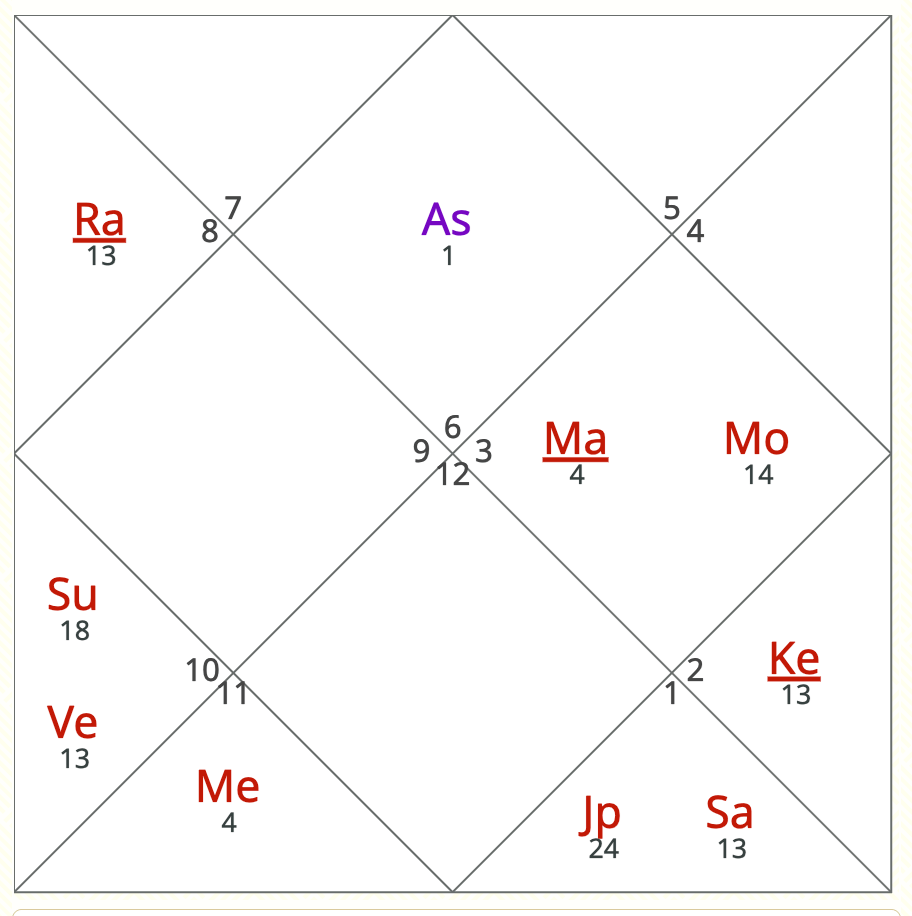
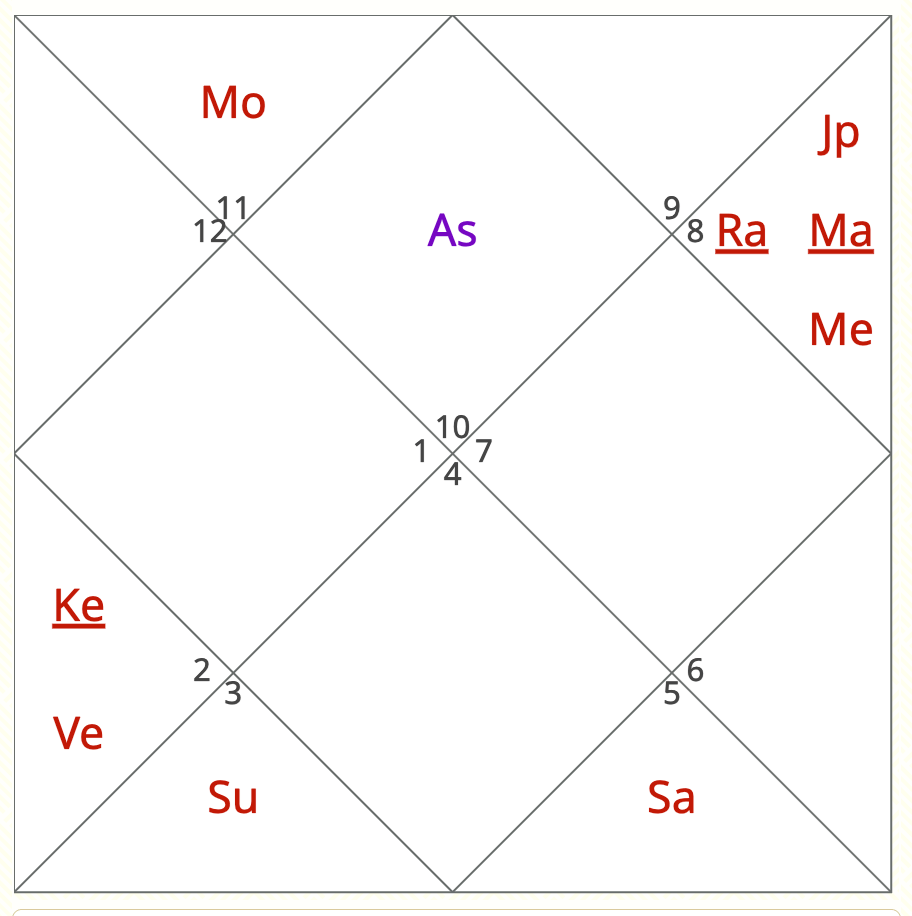
Examining a chart from the late nineteenth century illustrates these principles with remarkable clarity regarding pre-marital affairs that do not culminate in marriage. In this chart, the Panchamesh Saturn and Saptamesh Jupiter formed a relationship in the birth chart, clearly indicating the potential for a love affair before marriage. However, the critical observation lay in the Navamsa, where Saturn and Jupiter showed no connection whatsoever. This absence indicated that while the native would experience a significant romantic involvement before marriage, this relationship would not transform into matrimonial union.
Analyzing the Tritiya Bhava in the Navamsa revealed no planets occupying the house, but the Tritiyesh Jupiter cast a benefic aspect upon it, granting the native considerable courage and boldness in romantic matters. More significantly, Mars and Venus formed a mutual relationship in the Navamsa with both planets being exceptionally strong, indicating intense sexual desire and romantic passion. Venus occupied its own sign (Tula or Vrisha) alongside Ketu, further amplifying desire while adding the element of unconventionality and secrecy.
The defining factor came from Saturn’s restrictive aspect upon Venus. This Shani drishti on Shukra proved crucial as it prevented open enjoyment of romantic relationships. The native could not publicly acknowledge their romantic involvements due to social restrictions, family obligations, or personal circumstances. This Saturnine aspect forced secrecy and restriction upon the native’s romantic pursuits, ensuring that even the pre-marital affair remained hidden and could not be legitimized through marriage. Eventually, the affair became public knowledge despite these restrictions, but it did not result in marriage, validating the initial analysis that the lack of Navamsa connection between Panchamesh and Saptamesh prevents the conversion of love into matrimony.
Chart Analysis: The 1999 Love Affair and 2006 Marriage
 |  |
|---|
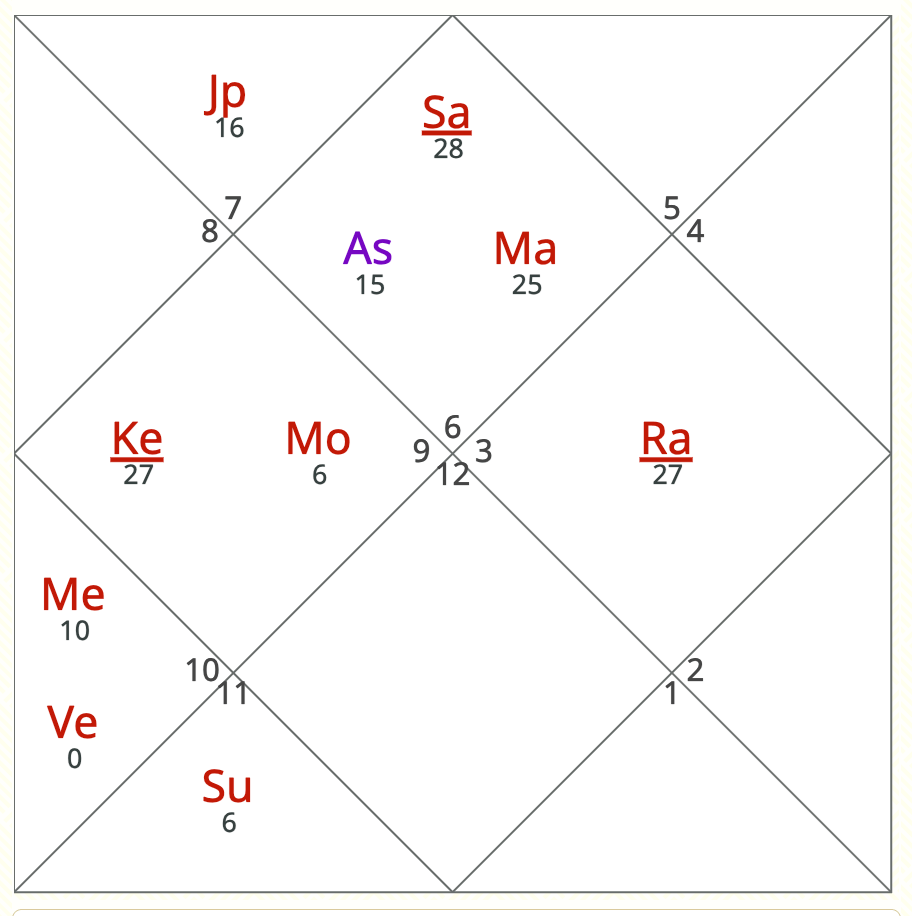
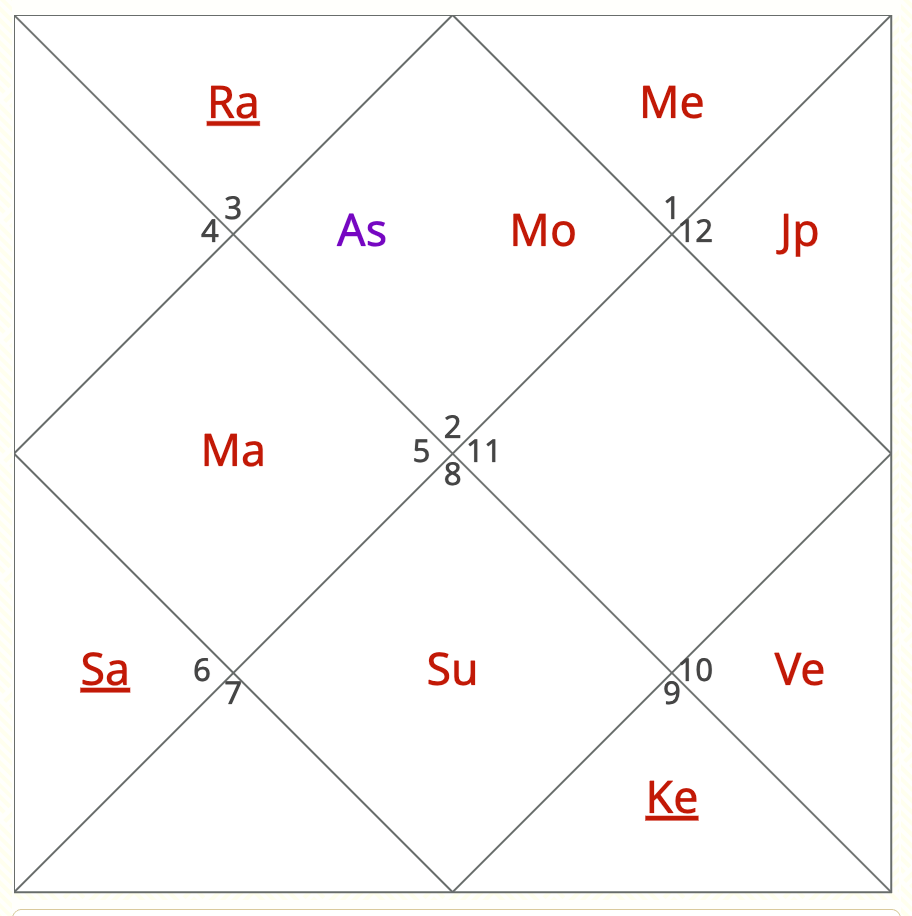
A second chart demonstrates the dynamics where love converts to marriage and subsequently leads to post-marital complications. Here, the Panchamesh Jupiter and Saptamesh Saturn did not connect in the birth chart, suggesting no initial romantic predisposition. However, in the Navamsa, these planets formed a Samasaptak (mutual seventh aspect) relationship, indicating that any love affair beginning before marriage would successfully convert into matrimony.
The timeline validated this analysis perfectly. The affair commenced in 1999 during the Venus Mahadasha, specifically during the Shukra-Shani period. The romance progressed through the subsequent years, and the couple married in July 2006. The Navamsa connection between the birth chart’s fifth and seventh lords ensured that the pre-marital love transformed into legal marriage.
Post marriage, the chart revealed the Ashtamesh Jupiter casting its aspect upon the Chaturthesh Sun, creating the foundation for secret pleasures. The Tritiya Bhava, while unoccupied in the Navamsa, was influenced by benefic planets, and its lord occupied its exaltation sign, granting excessive courage to pursue unconventional relationships. In 2010, during Surya Mahadasha, another secret affair commenced because Jupiter aspecting the Sun triggered the hidden pleasure principle established by the Ashtam-Chaturth connection.
This affair became public knowledge in 2013 during the continued Surya period. The astrological reasoning behind the exposure lies in the nature of Surya (Sun) periods versus Shukra (Venus) periods. Shukra operates in the night hours and represents hidden, emotional, and secretive activities. When the affair began in 1999 during Venus period, it remained hidden. However, Surya represents the daytime, visibility, public exposure, and illumination. When the Sun’s period operated, the secret could no longer remain concealed, leading to public exposure in 2013 and subsequent divorce.
Chart Analysis: Post-Marital Secret Affair and 2013 Exposure
 |  |
|---|
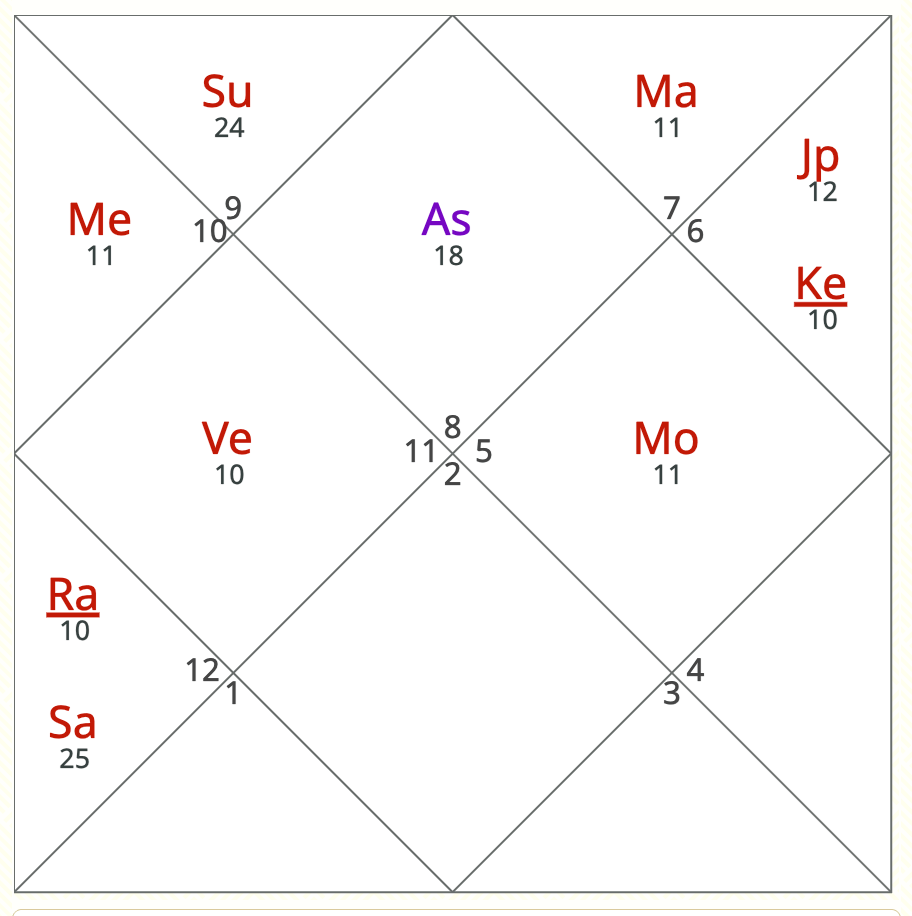
Continuing the analysis of the above chart, the specific mechanics of the 2010 affair and 2013 exposure reveal deeper astrological truths. The Ashtamesh (Jupiter) influencing the Chaturth (Sun) created the psychological need for secret pleasures outside marriage. The native had married their first love in 2006, but by 2010, the domestic situation no longer provided the excitement or emotional satisfaction indicated by the Ashtam-Chaturth connection.
The Surya Mahadasha beginning in 2010 activated this hidden desire because the Sun as Chaturthesh received the aspect of Ashtamesh Jupiter. The Sun also represents ego, authority, and the public self, so when the affair occurred during this period, the native’s ego became involved in ways that made discretion difficult. Unlike the initial romance in 1999 which was conducted with the secrecy of Venus (night planet), the 2010 affair carried the boldness and visibility of Surya (day planet).
The exposure in 2013 occurred because Surya’s energy inevitably brings things to light. The combination of excessive courage from the strong Tritiyesh, the secret pleasure psychology from the Ashtam-Chaturth connection, and the public visibility of the Sun period created the perfect storm for marital dissolution. The divorce finalized the karmic pattern indicated by the Navamsa showing post-marital rather than pre-marital romantic complications.
Chart Analysis: Absence of Love Marriage Indicators
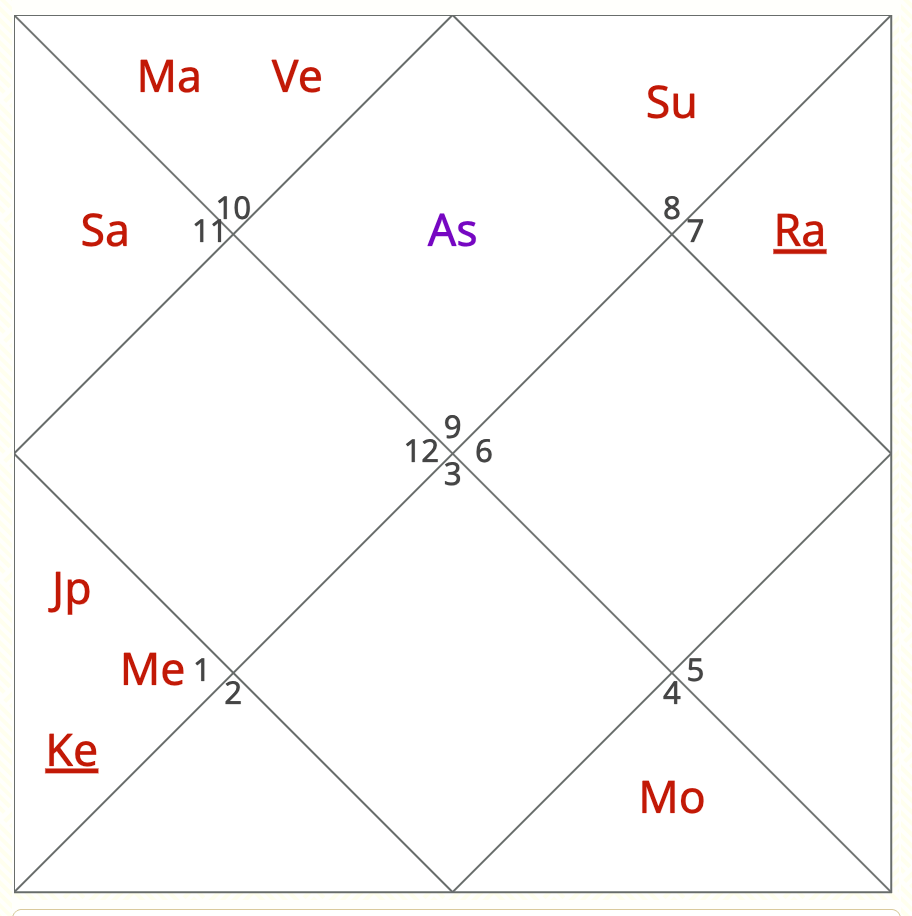
A third chart reveals the scenario where traditional love marriage indicators are absent yet extramarital involvement still occurs. In this chart, Jupiter and Venus did not connect in either the birth chart or the Navamsa, eliminating the possibility of love marriage through conventional indicators. The Panchamesh and Saptamesh of the Navamsa showed only a one-sided relationship (one aspecting the other but not mutually), which is insufficient for strong love marriage indications.
However, examining the Tritiya Bhava revealed Saturn occupying its own sign (Makara or Kumbha) and forming a Pap Kartari (malefic hemmed) situation. Ketu approached from one side while Venus with Moon approached from the other, creating a binding and secretive courage. This granted the native tremendous audacity to pursue forbidden relationships despite the absence of romantic love marriage yogas.
Mars and Venus conjoined in the chart with Mars being exalted in Makara, creating powerful physical desire. The Dwadash lord Mars sitting with Venus and aspecting the seventh house created the opposite desire pattern, leading to extramarital involvement driven purely by physical desire and the courage to act on it, rather than emotional romantic attachment. This case illustrates that extramarital affairs can occur even without the traditional Pancham-Saptam connections, provided the third house, desire indicators (Mars-Venus), and secret pleasure houses (Ashtam-Chaturth) are sufficiently activated.
Timing and Periods: When Affairs Manifest
Venus Periods vs Sun Periods: Night vs Day Revelations
The timing of when affairs begin and when they become public follows distinct planetary patterns based on the nature of the planets involved. Venus (Shukra) represents night, secrecy, romance, and emotional connections. When affairs commence during Venus Mahadasha or Antardasha, particularly during the night hours or when Venus occupies night signs, the relationship tends to remain hidden, emotional, and sustained over longer periods without exposure.
Conversely, Sun (Surya) represents day, visibility, authority, and public exposure. When affairs continue into or begin during Sun Mahadasha, especially when Surya aspects the Ashtam Bhava or its lord, the probability of public exposure increases dramatically. The Sun illuminates whatever it touches, so secret relationships active during Solar periods inevitably face revelation. This explains why many secret affairs that begin in Venus periods get exposed during subsequent Sun periods, as the energy shifts from hidden and emotional to visible and authoritative.
Jupiter and Saturn Transits
Jupiter’s transit through the Ashtam Bhava or its aspect on the Chaturth Bhava can trigger the desire for secret pleasures, particularly if the natal chart already shows Ashtam-Chaturth connections. Jupiter expands whatever it touches, so when it influences the houses of secrecy and domestic happiness simultaneously, it may expand the native’s capacity for maintaining dual relationships or increase the psychological need for secret excitement.
Saturn’s transit through the Tritiya Bhava or aspect on the Tritiyesh can either restrict or solidify the courage for extramarital affairs depending on Saturn’s strength and the natal promise. If the natal third house is strong, Saturn’s influence may make the native more cautious and secretive but will not prevent the affair. If the natal third house is weak, Saturn’s restrictive energy may prevent the native from acting on their desires through fear of consequences.
Conclusion
The astrological analysis of love affairs, whether pre-marital or post-marital, demands a sophisticated understanding of divisional charts, house lordships, planetary relationships, and the specific timing of planetary periods. The Pancham and Saptam Bhava connection in the birth chart provides the initial romantic potential, while their relationship in the Navamsa determines whether love transforms into marriage or flourishes within it. Post-marital affairs require the additional activation of the Tritiya Bhava for courage, the Ashtam-Chaturth relationship for secret pleasure seeking, and specific Mars-Venus dynamics in the Navamsa for intense desire.
Saturn’s influence brings the necessary secrecy and restriction, while Ketu adds the element of operating outside conventional boundaries. The Shashtesh and Dwadash lord influences create unconventional and opposite desires that deviate from social norms. These indicators, when properly synthesized with the timing of Venus (secrecy) and Sun (exposure) periods, provide remarkable insight into the complex emotional and relational patterns that define human romantic experience.
Astrological practitioners must approach these analyses with wisdom, recognizing that these combinations indicate potentials and psychological patterns rather than fixed destinies. The purpose of such knowledge is not to condemn or predict destruction, but to understand the complex interplay of desire, courage, and circumstance that governs human relationships, potentially offering guidance for navigating these turbulent emotional waters with greater awareness and conscious choice.
Frequently Asked Questions
Why does my love relationship not turning into marriage even though we love each other deeply? +
This situation typically occurs when the Panchamesh and Saptamesh form a relationship in your birth chart but fail to connect in the Navamsa chart. While the birth chart indicates romantic feelings and attachment, the Navamsa determines whether these feelings will culminate in matrimony. Without the Navamsa validation, external circumstances, family opposition, or personal hesitations often prevent the love affair from converting into marriage, regardless of the emotional intensity involved.
Can a happy marriage still have secret affairs according to astrology? +
Yes, this occurs when the Ashtamesh (eighth lord) influences the Chaturth Bhava (fourth house) or its lord, creating a psychological need for secret pleasures that operates independently of domestic happiness. The native may have a functioning, stable marriage but still feel compelled toward clandestine relationships due to the Ashtam-Chaturth connection. Additionally, strong Mars-Venus combinations in the Navamsa can create desires that exceed what the marital relationship satisfies, leading to extramarital involvement despite marital contentment.
Will my secret affair become public knowledge or can it remain hidden forever? +
Astrologically, the exposure of secret affairs depends heavily on the planetary periods operating. If the affair occurs or continues during Venus periods, it tends to remain hidden because Venus operates in the night and represents secrecy. However, when the period shifts to Sun (Surya), which represents daytime and visibility, exposure becomes highly probable. Sun illuminates whatever it touches, so affairs active during Solar periods or those that begin in Venus periods but continue into Sun periods face significant risk of public revelation.
Does having Saturn with Venus mean I will have restricted or unfulfilled desires in marriage? +
When Saturn aspects or conjoins Venus, particularly if Saturn is strong in its own sign or exaltation, this creates a pattern where desires either remain unfulfilled or must be pursued secretively. If Saturn is weak, you may simply experience delayed or restricted romantic fulfillment within marriage. However, if Saturn is strong and other factors like a strong Tritiya Bhava and Mars-Venus connections exist, this Saturn-Venus relationship often forces extramarital desires to remain hidden and secretive rather than openly expressed or fulfilled within the marriage.
Q5: What makes someone courageous enough to pursue relationships outside marriage despite the risks? +
The Tritiya Bhava (third house) and its lord provide the necessary courage and audacity. When malefic planets like Mars, Saturn, or Rahu occupy the third house, or when the Tritiyesh is strong (occupying its own sign, exaltation sign, or aspecting its own house), the native possesses the boldness to challenge social norms and marital vows. Benefic aspects on these positions from Jupiter or Venus further strengthen this courage, making it purposeful rather than impulsive. Without this third house activation, the native may desire extramarital connections but will lack the sustained courage to pursue them.
More Marriage Articles
Related guides on compatibility, timing, and interpretation.

Marriage
How to Check Early, Timely, and Late Marriage in Navamsa (D9) Chart
A detailed yet easy-to-follow guide to understanding early, timely, or late marriage through the Navamsa (D9) chart, revealing how planetary influences determine when marriage is likely to manifest.
4 May 2026