
Foreign Settlement Prediction in Vedic Astrology: The Chaturthamsa and Navamsa Method for Analyzing Residence Change and Happiness Abroad
Published 3 May 2026 · By OrbitVeda Editorial · Updated 3 May 2026
The question of foreign settlement has become increasingly prevalent in contemporary astrological practice, with parents and young students alike seeking to understand whether relocation to foreign lands for education or permanent residence will prove successful, harmonious, or ultimately disappointing. While various astrological tools exist for examining this domain, a particularly systematic and reliable methodology emerges from the combined analysis of the Chaturthamsa (D4) and Navamsa (D9) charts, utilizing specific principles regarding the Fourth House (representing the native homeland and happiness) and the Eighth House (representing transformation, separation from duties, and residence change). This approach moves beyond the birth chart’s general indications to examine the specific divisional charts governing property, residence, and marital happiness, providing nuanced insights into whether an individual will permanently leave their birth country, maintain connections with the homeland, or return disappointed after initial attempts at settlement. The following comprehensive analysis presents the precise methodology for evaluating foreign settlement prospects, utilizing the Ayer Chaturthamsa (also known as Raman Chaturthamsa) alongside the Navamsa chart to determine both the probability of leaving one’s country and the quality of happiness experienced in foreign lands.
Fundamental Principles of Residence Analysis
The Fourth House and Eighth House Dynamic
The foundational understanding of foreign settlement begins with recognizing the distinct functions of the Chaturth Bhava (Fourth House) and the Ashtam Bhava (Eighth House) across the relevant divisional charts. The Fourth House represents the native place of birth, the homeland, domestic happiness, and the general sense of belonging to one’s geographical and cultural origins. When this house or its lord (Chaturthesh) becomes afflicted, it indicates a disruption of connection with the birthplace, though this affliction alone does not necessarily guarantee permanent departure. The Eighth House, conversely, represents the forces that separate an individual from their duties, responsibilities, and established patterns, including the phenomenon of moving away from one’s native environment. In the specific context of foreign settlement analysis, the Ashtamesh (Eighth Lord) carries particular significance, as its condition determines whether the separation from homeland becomes permanent or temporary.
The Role of Chaturthamsa (D4) in Residence Prediction
While the birth chart (D1) provides general indications regarding the fourth house and its lord, the Chaturthamsa (D4) serves as the specialized varga for analyzing all matters related to residence, property, vehicles, and domestic happiness. Among the various methods of calculating the Chaturthamsa including the Parashari method and the Venkatesh method—the Ayer Chaturthamsa (also referred to as the Raman Chaturthamsa) has proven particularly effective for examining questions of foreign residence and settlement. In this divisional chart, the First House represents the individual’s connection to their current residence, the Fourth House specifically indicates the quality of domestic happiness and attachment to place, and the Eighth House signifies the potential for radical changes in residence including foreign relocation. The analysis of the D4 chart provides the primary framework for determining whether residence change will occur, while the Navamsa chart serves as the confirming layer that reveals the permanence of the move and the emotional satisfaction derived from it.
The Confirmatory Function of Navamsa
The Navamsa (D9) chart functions as the secondary confirmation tool in this methodology, specifically utilized to examine the condition of planets extracted from the D4 chart. Rather than analyzing the Navamsa’s own house positions independently for this specific query, the technique requires taking specific lords from the D4 chart—particularly the Ashtamesh (Eighth Lord) and the Chaturthesh (Fourth Lord)—and examining their condition within the Navamsa framework. This cross-referencing between the D4 and D9 charts creates a sophisticated analytical layer where the D4 indicates the potential for movement and the Navamsa reveals the quality, permanence, and satisfaction associated with that movement.
The Step-by-Step Analytical Method
Step 1: Examination of the Birth Chart (D1)
Begin the analysis by examining the Fourth House and its lord in the birth chart to establish the baseline of connection to the homeland. If the Fourth House or Chaturthesh shows affliction through malefic aspects, conjunctions, or placement in dusthana houses, this indicates a fundamental disruption of the native’s connection to their birthplace. However, this initial affliction merely establishes the potential for movement; it does not confirm whether the movement will result in permanent settlement, temporary residence, or eventual return. The birth chart analysis serves as the preliminary filter that identifies candidates for foreign residence, while the divisional charts provide the specific details of timing and outcome.
Step 2: Analysis of the Chaturthamsa (D4) Chart
Construct the Ayer Chaturthamsa chart and examine four specific points: the First House (Lagna), the First Lord (Lagnesh), the Fourth House, and the Fourth Lord (Chaturthesh). If affliction appears on any of these four points—whether through malefic occupation, aspect, or conjunction—this confirms the indication of residence change. Specifically, affliction to the Fourth House or Chaturthesh in the D4 chart indicates that the individual will leave their birthplace, whether through voluntary choice or circumstances beyond their control. The Eighth House in the D4 chart becomes particularly significant here; identify the Ashtamesh (Eighth Lord) in this chart, as this planet will be carried forward to the Navamsa analysis to determine the permanence of the foreign settlement.
Step 3: Evaluating the Ashtamesh in Navamsa (Will They Settle Abroad?)
Extract the Ashtamesh (Eighth Lord) from the D4 chart and locate its position in the Navamsa chart. Examine what influences this planet receives in the Navamsa:
If the Ashtamesh receives only malefic influences (aspects or conjunctions from Saturn, Mars, Rahu, Ketu, or afflicted Sun), this indicates permanent settlement abroad. The individual will leave their birth country and establish permanent residence in foreign lands, effectively severing the primary connection with the homeland.
If the Ashtamesh receives mixed influences (both benefic and malefic aspects), this indicates that the individual will maintain a connection with the homeland despite residing abroad. They will travel back and forth, maintaining relationships, property, or emotional ties with their birth country, without fully settling permanently in the foreign land.
If the Ashtamesh receives only benefic influences (aspects from Jupiter, Venus, well-placed Mercury, or Moon), this indicates that while the individual may travel abroad, they will not permanently settle there. They may visit for education or work but ultimately return to their homeland or maintain only temporary residence.
Step 4: Evaluating the Chaturthesh in Navamsa (Will They Be Happy?)
Extract the Chaturthesh (Fourth Lord) from the D4 chart and examine its condition in the Navamsa chart to determine the quality of happiness and satisfaction in foreign lands:
If the Chaturthesh receives only malefic influences in the Navamsa, the individual will experience unhappiness, distress, and dissatisfaction in foreign lands. Despite achieving the goal of foreign residence, they will suffer from health issues, mental stress, business failures, or general misery, potentially forcing them to return home.
If the Chaturthesh receives mixed influences, the experience will be ambivalent—periods of comfort interspersed with difficulties, or material success accompanied by emotional dissatisfaction.
If the Chaturthesh receives strong benefic influences, the individual will find happiness, prosperity, and contentment in the foreign environment, successfully establishing a fulfilling life abroad.
Specific Combinations and Their Manifestations
Permanent Settlement with Homeland Connection
When the Ashtamesh in Navamsa shows mixed influences predominantly malefic but with some benefic presence the individual settles abroad but maintains periodic connections with the homeland. This manifests as someone who establishes business or residence in foreign lands but returns to their birth country periodically, unable to completely sever emotional or practical ties. The predominance of malefic influence ensures the physical relocation occurs, while the presence of benefic influence ensures the connection survives, creating a transnational existence rather than complete emigration.
Permanent Settlement with Complete Severance
The combination of Ashtamesh receiving exclusively malefic influences in Navamsa with Chaturthesh receiving mixed or benefic influences creates the scenario of permanent settlement with varying degrees of happiness. If the Chaturthesh is well placed, the individual not only settles permanently but thrives in the foreign environment, finding greater happiness abroad than in the homeland. If the Chaturthesh is afflicted, the settlement remains permanent but unhappy, creating a situation where the individual remains abroad due to circumstances despite suffering.
The Returnee Pattern
When the Ashtamesh shows affliction (indicating the journey abroad) but the Chaturthesh in Navamsa becomes severely afflicted particularly by debilitation, combustion, or multiple malefic influences the individual travels abroad but returns due to unhappiness or failure. This pattern appears frequently in cases where students travel for education but return home due to inability to adjust, health problems, or academic failure. The Chaturthesh affliction specifically indicates that the fourth house matters (happiness, comfort, emotional security) cannot be satisfied in the foreign environment, compelling return.
Practical Case Studies
The Unsettled Traveler: Mixed Ashtamesh Influences
 |  |
|---|
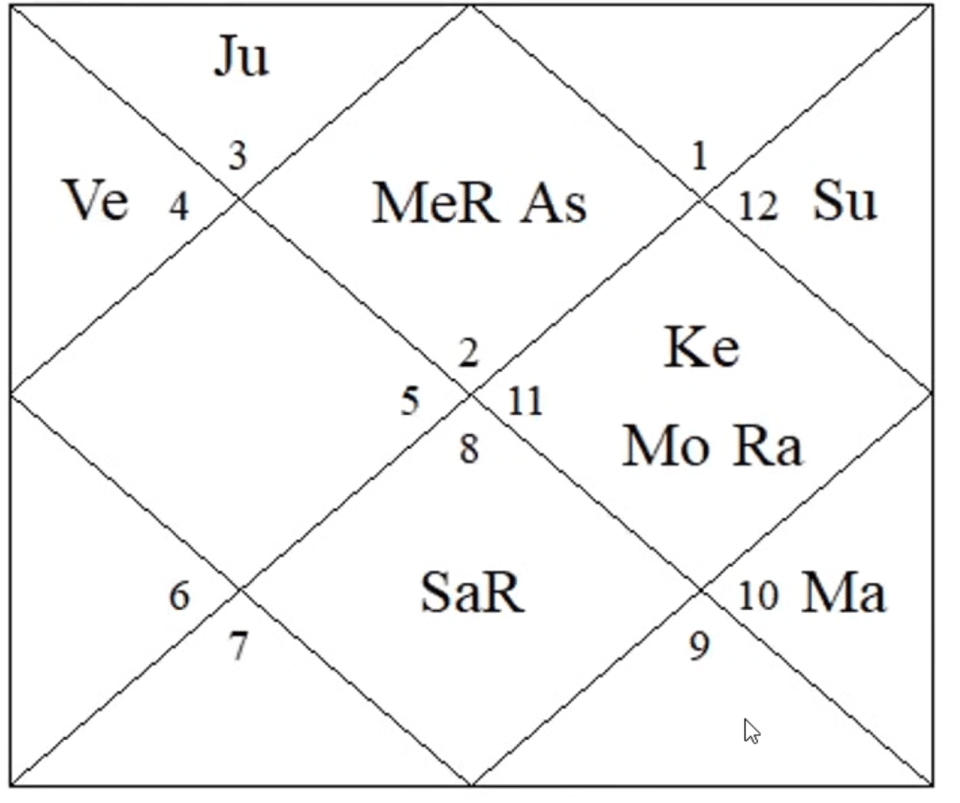
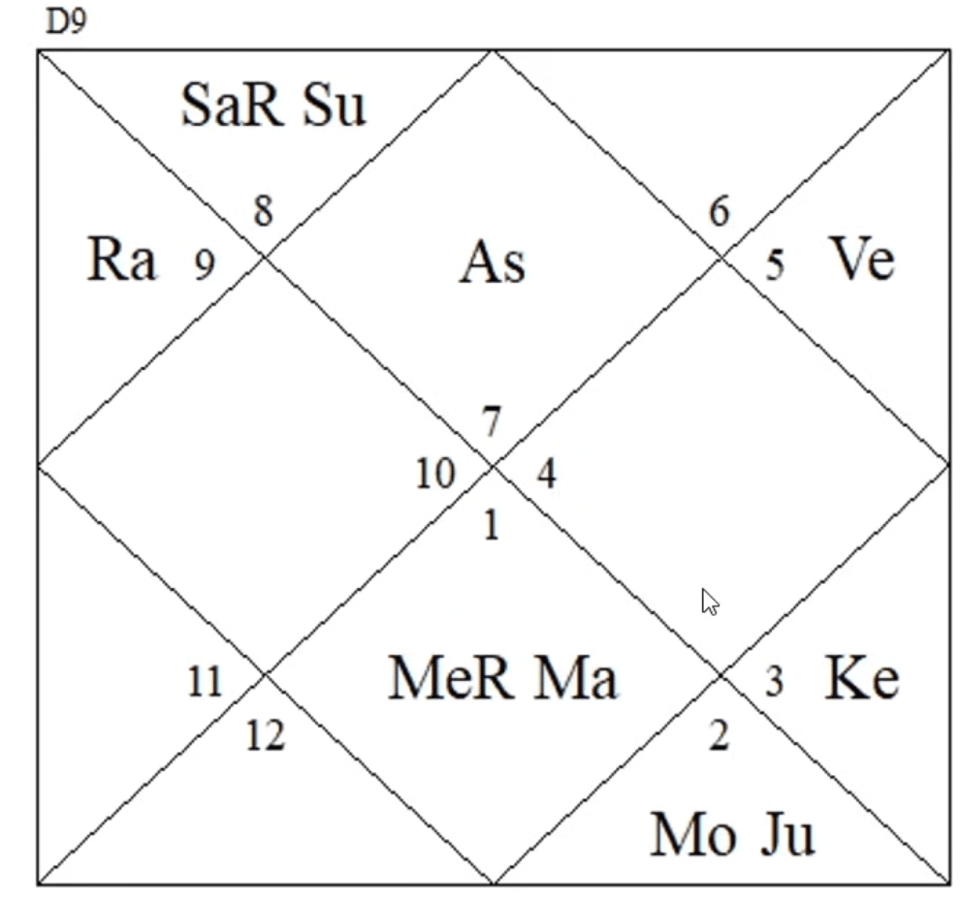
In one case examined, the D4 Ashtamesh was Jupiter, which in the Navamsa chart was conjoined with exalted Moon (benefic) but aspected by Saturn and Sun (malefic), creating a mixed influence pattern. The individual had traveled to multiple countries for business, establishing temporary residences, but had not achieved permanent settlement in any single location. The mixed influences on the Ashtamesh manifested as the inability to completely sever ties with the homeland (India) while simultaneously being unable to establish permanent roots abroad. The Chaturthesh (Sun) in Navamsa was also afflicted by Saturn and Mars, indicating that while the person maintained business interests abroad, they experienced significant stress and lack of peace in these foreign residences, eventually returning frequently to the homeland.
The Permanent Settler: Malefic Dominance on Ashtamesh
 |  |
|---|
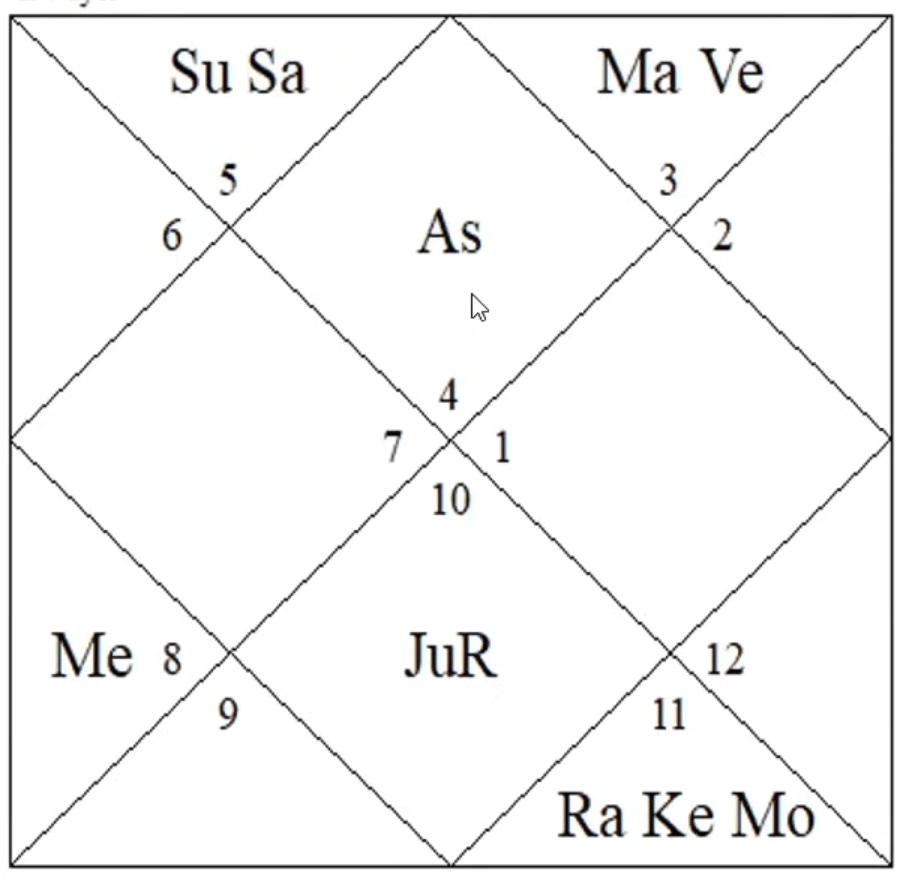
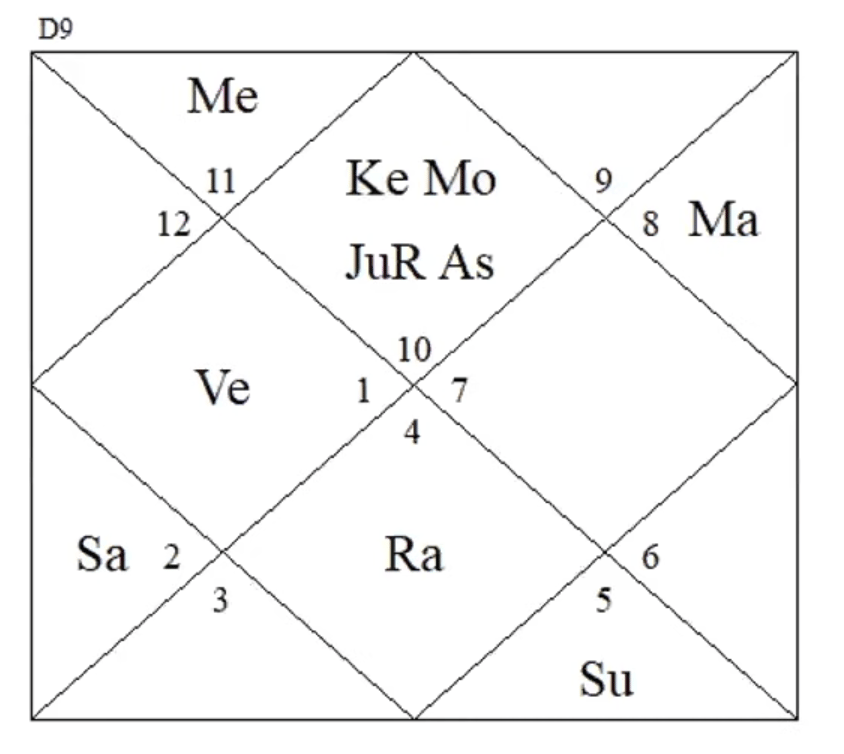
A case from 1977 demonstrated the permanent settlement pattern. In the D4 chart, the Fourth House and Chaturthesh (Venus) were afflicted, indicating the necessity of leaving the homeland. The Ashtamesh (Saturn) when placed in the Navamsa was aspected by Mars and unaspected by significant benefics, showing predominantly malefic influence. This individual permanently settled in London, establishing residence and business there. The Chaturthesh in Navamsa showed neutral influences—neither strongly benefic nor severely malefic—resulting in a life abroad that was neither particularly happy nor unhappy, but stable and settled. The lack of strong benefic influence on the Ashtamesh ensured no compelling reason to maintain strong homeland connections, while the neutral Chaturthesh allowed for comfortable, if not ecstatic, existence abroad.
The Disappointed Returnee: Afflicted Chaturthesh
 |  |
|---|
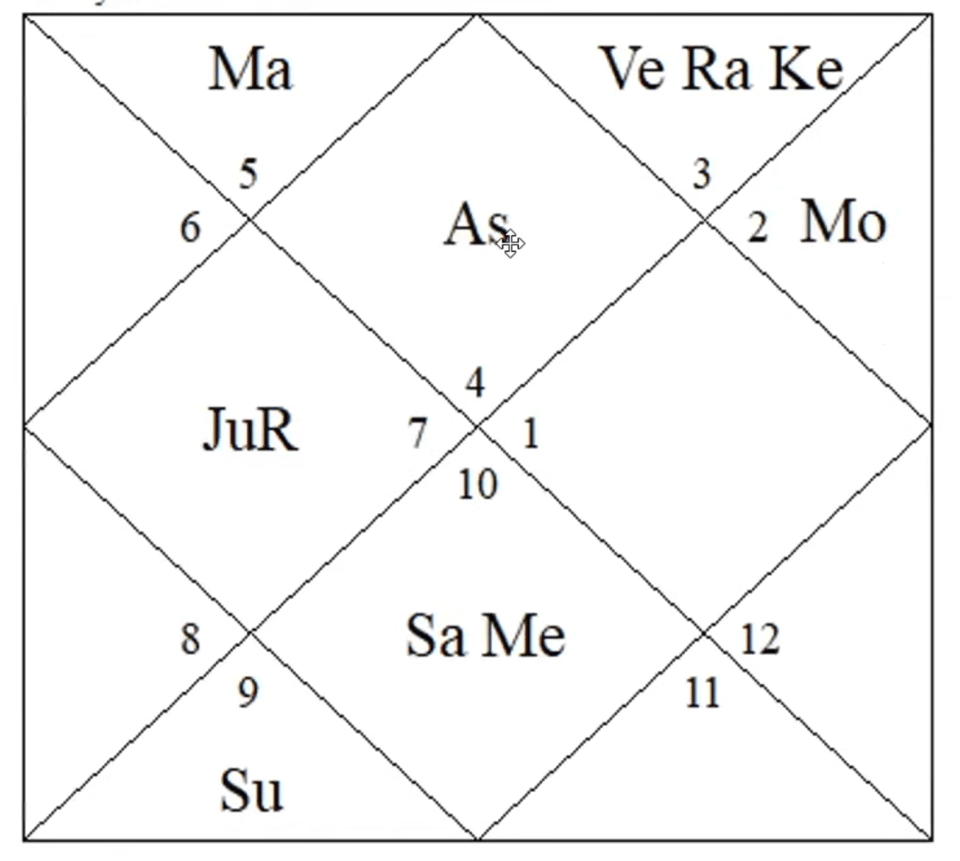
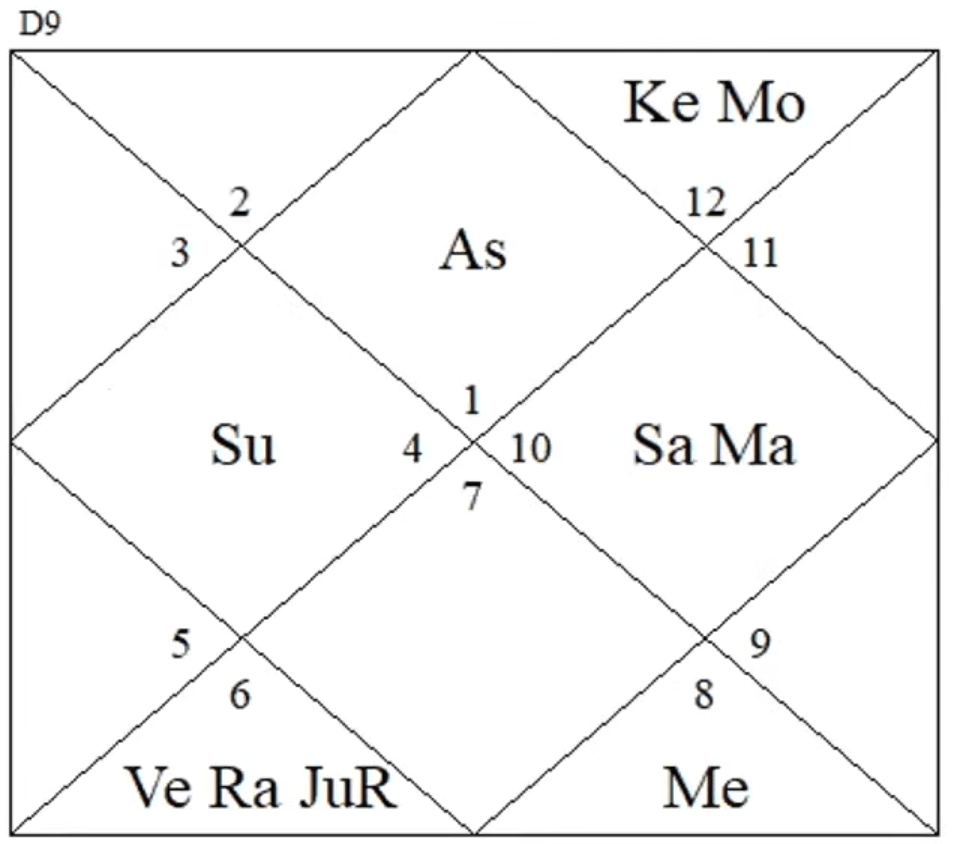
A third case illustrated the return pattern. The individual traveled abroad for education with the intention of permanent settlement. The D4 Ashtamesh (Saturn) was severely afflicted in the Navamsa conjoined with Sun and Mars, creating intense malefic influence—indicating the journey abroad would occur. However, the D4 Chaturthesh (Venus) in Navamsa was debilitated, afflicted by Rahu-Ketu axis, and receiving only weak benefic support from Jupiter. This combination manifested as the individual going abroad for studies but suffering such extreme unhappiness, mental distress, and physical health issues that they abandoned their course and returned home. The severe affliction of the Chaturthesh in Navamsa specifically indicated that the fourth house significations (happiness, comfort, mental peace) could not be realized in the foreign environment, making return inevitable.
Important Considerations and Definitions
Geographical Definition of Foreign
In applying these principles, the classical definition of foreign lands “Samudra Paar” or across the sea—should be maintained. Movement to neighboring countries sharing land borders, such as Nepal or Bhutan for Indian natives, may not trigger the same astrological indications as crossing oceans to distant continents. The Eighth House influence in the D4 and Navamsa specifically indicates crossing significant geographical and cultural boundaries rather than merely relocating to adjacent territories.
The Role of Dasha Periods
The timing of foreign settlement or return is determined by the planetary periods (Dasha) of the planets involved in the afflictions or supports. If the Ashtamesh is afflicted by specific planets, their Dasha or Antardasha periods will trigger the journey abroad. Similarly, if the Chaturthesh is afflicted, periods of those afflicting planets may bring unhappiness or compel return. It is essential to examine whether the native is running the period of a planet causing affliction to the fourth house significations, as this will activate the negative potential indicated in the divisional charts.
Distinction Between Voluntary and Compelled Departure
When the Chaturthesh in the birth chart or D4 is afflicted but the Ashtamesh is not significantly activated, the individual may leave the homeland due to circumstances beyond their control—political upheaval, family necessities, or economic compulsion. When the Ashtamesh is strongly activated by choice or desire, the departure is voluntary, driven by the individual’s own ambition for foreign education or settlement. This distinction helps in counseling whether the native should actively pursue foreign opportunities or wait for circumstances to force the issue.
Conclusion
The prediction of foreign settlement requires moving beyond the birth chart’s general indications to examine the specialized divisional charts, specifically the Ayer Chaturthamsa (D4) for residence potential and the Navamsa (D9) for confirmation of permanence and happiness. By analyzing the Ashtamesh (Eighth Lord) from the D4 in the Navamsa chart, one determines whether the individual will permanently settle abroad, maintain transnational connections, or merely visit temporarily. By examining the Chaturthesh (Fourth Lord) from the D4 in the Navamsa, one assesses whether the foreign residence will bring happiness and prosperity or misery and eventual return. This methodical approach—checking the D1 for initial potential, the D4 for specific residence change indications, and cross-referencing with the Navamsa for qualitative outcomes—provides a comprehensive framework for answering questions about foreign settlement with precision and nuance, helping individuals and families make informed decisions about education, career, and residence abroad.
Frequently Asked Questions
How do I know if I will permanently settle abroad or just travel? +
Examine the Ashtamesh (Eighth Lord) from your Chaturthamsa (D4) chart in your Navamsa chart. If this planet receives only malefic influences (aspects from Saturn, Mars, Rahu, etc.), permanent settlement is indicated. If it receives mixed influences, you will maintain connections with your homeland while living abroad. If it receives only benefic influences, you will likely return home after temporary stays.
Will I be happy if I move to a foreign country? +
Check the condition of your Chaturthesh (Fourth Lord) from the Chaturthamsa in your Navamsa chart. If this planet receives only malefic influences, you will experience unhappiness, health issues, or business failure abroad. If it receives benefic influences, you will find contentment and prosperity. Mixed influences indicate an ambivalent experience with both comforts and difficulties.
What is the difference between Parashari D4 and Ayer D4 for this analysis? +
While various methods exist for calculating the Chaturthamsa, the Ayer Chaturthamsa (also called Raman Chaturthamsa) has proven particularly effective for foreign settlement analysis. You can obtain this chart from standard astrology software by selecting the appropriate option, or calculate it manually using the specific rules outlined in texts such as Saral Six or other Jaimini/Parashari commentaries.
Does moving to a neighboring country count as foreign settlement? +
According to classical definitions, "foreign" specifically means across the sea (Samudra Paar). Moving to landlocked neighboring countries may not trigger the same eighth house indications as crossing oceans. The Eighth House influence specifically indicates crossing significant geographical and cultural boundaries, so analyze whether the destination represents a fundamental separation from your cultural and geographical origins.
More Blog Articles
Continue reading related astrology guides.

Blog
Jupiter Transit in Cancer 2026–2027: Predictions for All Ascendants
Jupiter’s exalted transit in Cancer from 2026 to 2027 brings major changes in career, relationships, money, property, spirituality, and health for all ascendants in Vedic astrology.
9 May 2026
Blog
When Will You Get Pregnant? Vedic Astrology Guide to Childbirth Timing
Learn how Vedic astrology predicts pregnancy and childbirth timing through the 5th house, Jupiter transits, Vimshottari Dasha, Putrakaraka, and Saptamsa (D7) chart analysis.
8 May 2026

Blog
How Debilitated Planets Create Massive Wealth: The Secret Rules for Cancellation of Debilitation and Wealth Generation
Learn how debilitated planets can become powerful wealth indicators in Vedic astrology. This guide explains cancellation of debilitation and the role of dispositors in creating financial success.
7 May 2026