
Assessing Professional Status Through Amatyakaraka: The Jaimini Sutra for Career Analysis
Published 25 April 2026 · By OrbitVeda Editorial · Updated 25 April 2026

Within the sophisticated framework of Jaimini astrology, specific karakas or significator planets hold the key to unlocking precise information about various life domains. Among these, the Amatyakaraka stands as the primary celestial indicator for professional achievement, status, and business acumen. Unlike the Parashari system which relies heavily on the 10th house lord and its dispositor, Jaimini methodology offers a more direct and rapid assessment technique through the placement and dignity of the Amatyakaraka. This planet, typically the second highest in degree among the seven primary planets excluding Rahu and Ketu, serves as the chief minister or advisor to the soul represented by the Atmakaraka. When this planet maintains strength and favorable associations, it elevates the native to positions of authority and material success. The assessment requires simultaneous examination of both the Rashi Chart (D1) and the Dasamsa (D10), the divisional chart specifically dedicated to career and professional standing, to confirm whether the promise of status indicated in the birth chart manifests in the vocational sphere.
The Dual Chart Methodology: D1 and D10 Analysis
The predictive accuracy of this Jaimini technique depends entirely on the corroboration between the natal promise and the divisional fulfillment. The Rashi Chart provides the foundational potential, revealing the inherent capacity for professional achievement, while the Dasamsa chart confirms whether that potential materializes into tangible status and recognition in society.
Evaluating Amatyakaraka in the Birth Chart
In the D1 chart, the Amatyakaraka must be located first by identifying the planet with the second highest degree among Sun, Moon, Mars, Mercury, Jupiter, Venus, and Saturn. Once identified, its dignity becomes paramount. The Amatyakaraka should ideally occupy its own sign, exaltation sign, or Mooltrikona position to ensure natural strength and capacity to bestow professional favors. If the Amatyakaraka occupies an enemy sign or debilitation, its ability to elevate status becomes compromised unless strong compensatory factors exist.
The planet must also avoid affliction from the Ghatika Karaka (GK), which represents obstacles and sudden disruptions. If the Amatyakaraka conjoins with or receives negative aspects from the Ghatika Karaka, the professional journey encounters significant impediments, delays, and unexpected setbacks. However, if the Amatyakaraka forms Raj Yogas through conjunction with benefic planets or exchanges (Parivartana Yoga) with the Atmakaraka or other significant planets, the native achieves high status and authority. Benefic aspects from the Sun, Mars, or Jupiter further fortify the Amatyakaraka, indicating recognition from government, competitive success, or wisdom guided professional choices respectively.
Validating Through Dasamsa
The Dasamsa chart (D10) serves as the ultimate arbiter of professional destiny. Even if the Amatyakaraka shows promise in the D1 chart, its placement in the D10 determines the actual manifestation of career success. In this divisional chart, the Amatyakaraka should ideally occupy the 10th house or associate with the 10th lord through conjunction or aspect. When the Amatyakaraka occupies the 10th house in Dasamsa, especially in its own sign or exaltation, it creates an unshakeable foundation for professional excellence and public recognition.
The presence of Rahu or Ketu aspects on the Amatyakaraka in the D10 chart introduces a complex dynamic. While these nodal influences often indicate struggles, obstacles, and unconventional paths to success, they do not necessarily deny status. Instead, they suggest that the native achieves prominence through overcoming significant challenges, working in foreign lands, or operating within unconventional professional domains. The key distinction lies in the dignity of the Amatyakaraka itself; if it maintains strength despite these aspects, the native emerges victorious through perseverance, whereas if it lacks dignity, the struggles may overwhelm the professional promise.
Indicators of Professional Elevation
Dignity and Planetary Strength
The Amatyakaraka must possess inherent strength through Sthana Bala (positional strength) to effectively deliver professional success. Placement in own sign indicates comfort and mastery in professional environments, allowing the native to command respect naturally. Exaltation elevates this further, suggesting peak achievement and recognition at the highest levels of society. For instance, when Jupiter serves as the Amatyakaraka and occupies Cancer (its exaltation sign) in the Dasamsa, it indicates wisdom based leadership roles, advisory positions to heads of state, or exceptional success in educational and judicial fields. Conversely, debilitation or placement in enemy signs requires the Amatyakaraka to work against its nature, often resulting in professional environments that feel restrictive or unsupportive, unless remedied by strong aspects or conjunctions.
Benefic Associations and Yoga Formation
The Amatyakaraka gains extraordinary power when involved in Raj Yogas or Dhana Yogas. A Parivartana Yoga (mutual exchange of signs) between the Amatyakaraka and the Atmakaraka creates a powerful synchronization between the soul’s desire and the means of achievement, often catapulting the native to positions of significant authority. Similarly, conjunction with the Sun brings government favor and administrative power, while association with Mars grants competitive edge and leadership in technical or military fields.
When the Amatyakaraka joins Saturn, particularly in earth signs or cardinal signs, it produces administrators with exceptional endurance and strategic vision, capable of building lasting institutions. The presence of Venus with the Amatyakaraka often indicates success in artistic, diplomatic, or luxury related industries, while Mercury conjunctions favor commerce, communication, and intellectual professions. These combinations must be assessed not only in the D1 chart but specifically in the D10 to confirm their professional relevance.
Aspectual Influences and Modifications
Benefic aspects from Jupiter or Venus upon the Amatyakaraka soften professional struggles and bring ethical success and financial prosperity. Jupiter’s fifth or ninth aspect indicates guidance from mentors and wisdom in decision making, while Venus aspects bring creativity and harmonious professional relationships.
However, aspects from Rahu or Ketu require careful interpretation. Rahu’s aspect creates ambition and sometimes unethical shortcuts or foreign associations, while Ketu’s aspect can create detachment from worldly success or sudden breaks in career continuity. When Saturn aspects the Amatyakaraka, it brings delays but also lasting achievements through persistence. The Sun’s aspect grants authority but may create ego conflicts with superiors. Each of these aspectual modifications must be weighed against the essential dignity of the Amatyakaraka to determine whether the net result supports or obstructs the native’s rise to status.
Case Studies in Professional Achievement
Margaret Thatcher: The Exalted Minister
 |  |
|---|
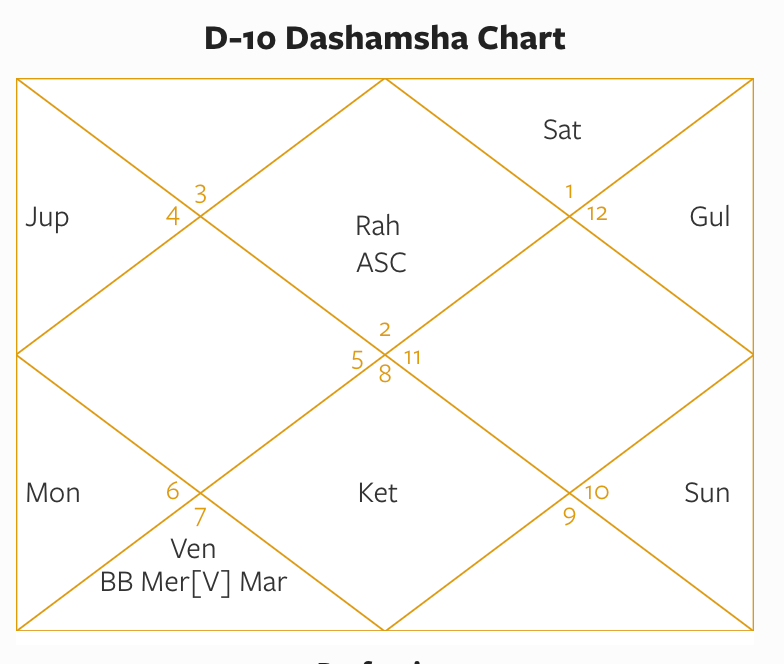
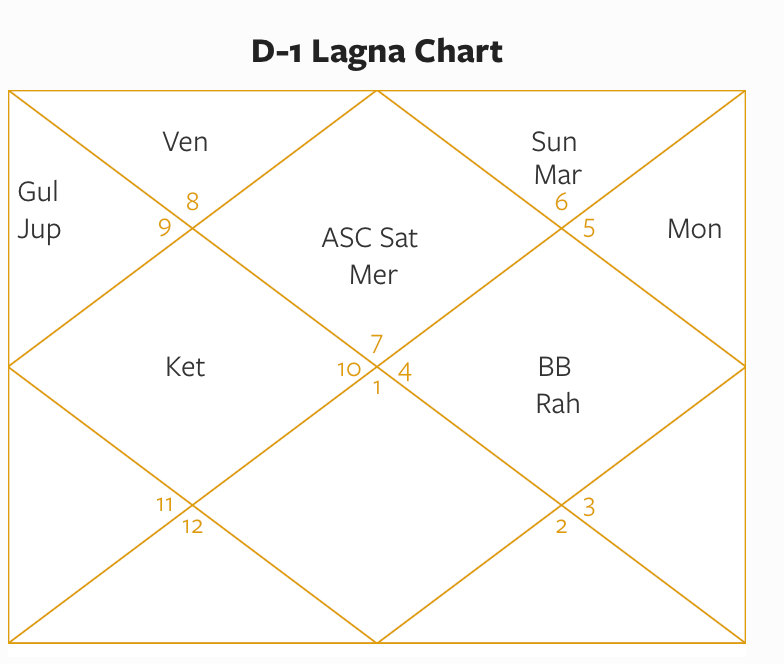
In examining the horoscope of Margaret Thatcher, the Iron Lady of British politics, the Amatyakaraka is Jupiter, which occupies its own sign in the Rashi Chart, indicating inherent wisdom and natural authority. This Jupiter receives beneficial aspects from the Sun (government, authority) and Mars (courage, determination), forming potent Raj Yogas that indicate leadership capacity and administrative strength.
In her Dasamsa chart (D10), this Jupiter moves to exaltation in Cancer, significantly elevating its promise. However, it comes under the aspect of Rahu and Ketu, the lunar nodes. This configuration perfectly illustrates the principle that nodal aspects indicate struggle and unconventional paths. Thatcher’s rise to power occurred through immense political struggle, opposition, and breaking traditional barriers for women in politics. The Rahu aspect brought controversy and divisive policies, while Ketu brought sudden transformative changes to her career trajectory. Yet, because the Amatyakaraka maintained exalted dignity, she achieved the highest executive office despite these obstacles, demonstrating that struggle indicated by nodes, when the karaka is strong, results in achievement through adversity rather than defeat.
Narendra Modi: The Parivartana of Power
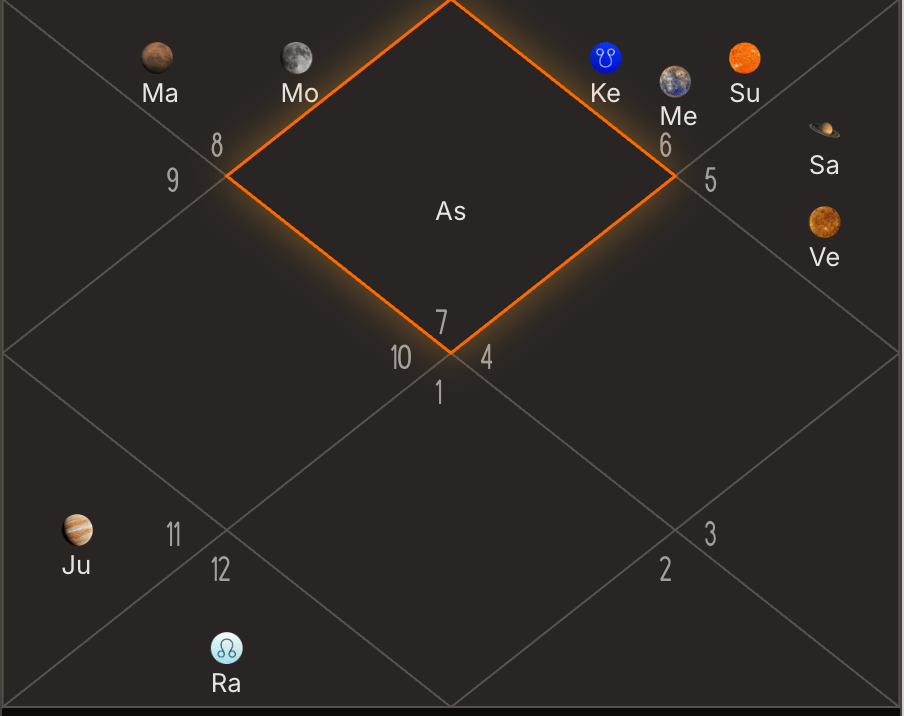
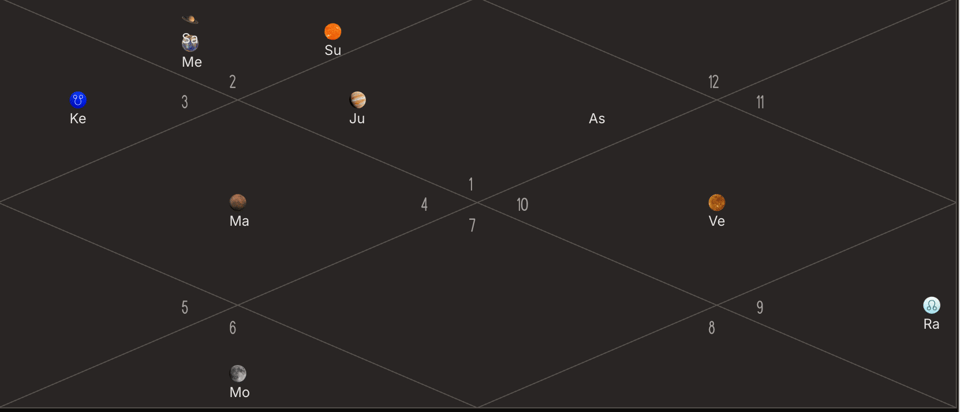
In the chart of Narendra Modi, the Amatyakaraka is Venus, which conjoins with Saturn in the birth chart. This combination immediately suggests a career built through discipline, long term strategy, and aesthetic or diplomatic sensibilities combined with structural rigor. Saturn’s influence on the Amatyakaraka indicates that status comes only after significant time, effort, and patience, typically after the age of thirty five or during Saturn’s planetary periods.
The extraordinary professional elevation becomes evident in the Dasamsa chart (D10), where Venus (the Amatyakaraka) occupies the 10th house (the house of profession and status) and forms a Parivartana Yoga (mutual exchange) with Saturn. This exchange creates a powerful Raj Yoga in the professional sphere, indicating authority, administrative control, and the capacity to implement large scale structural changes. The 10th house placement of the Amatyakaraka in Dasamsa is considered one of the most auspicious configurations for public status and recognition. Additionally, since Saturn functions as a Yogakaraka for certain ascendants and participates in this exchange, it elevates the native to positions of supreme authority through democratic or organizational means, reflecting a career that combines popular appeal (Venus) with disciplined governance (Saturn).
Practical Application and Synthesis
When applying this Jaimini technique for rapid professional assessment, the practitioner should first identify the Amatyakaraka in the D1 chart and note its dignity, aspects, and associations. If it occupies favorable positions and avoids affliction from the Ghatika Karaka, the native possesses the potential for professional success. However, this promise remains latent until confirmed by the Dasamsa chart.
In the D10, look for the Amatyakaraka’s house placement; the 10th house is ideal, while the 1st, 4th, 7th, or 9th houses also support professional achievement. If the Amatyakaraka in D10 receives aspects from Rahu or Ketu, prepare the native for a path involving significant obstacles, foreign elements, or unconventional methodologies, but assure them that if the karaka maintains dignity (own sign, exaltation, or benefic conjunctions), success is achieved precisely through overcoming these struggles.
The presence of Parivartana Yoga involving the Amatyakaraka in the D10 often indicates sudden rises in status and the ability to transform professional setbacks into advantages. This dual chart analysis provides a comprehensive view, ensuring that one does not predict high status based solely on the birth chart when the Dasamsa might show a weak or afflicted Amatyakaraka, which would indicate that while the native desires status, the actual professional environment lacks the supporting structures for such achievement.
Conclusion
The Amatyakaraka serves as a powerful tool within Jaimini astrology for quickly assessing professional potential and social status. By examining this planet’s dignity in the Rashi Chart and its specific placement and associations in the Dasamsa, one can determine not only the level of professional achievement possible but also the nature of the path, whether smooth or fraught with obstacles. When the Amatyakaraka occupies positions of strength, forms Raj Yogas, and avoids affliction from malefic influences or the Ghatika Karaka, it elevates the native to positions of authority and respect. Even when challenged by nodal aspects or difficult placements, if the essential dignity remains high, the native achieves status through perseverance and overcoming adversity, often leaving a lasting impact on their professional field. This method offers a sophisticated yet accessible approach to career analysis, bridging the gap between innate potential and manifested achievement.
Frequently Asked Questions
How can I check if my profession will bring high status using Amatyakaraka? +
Identify the planet with the second highest degree in your chart (Amatyakaraka). Check if it occupies its own sign or exaltation in the D1 chart without affliction from Ghatika Karaka. Then verify if this same planet occupies the 10th house or forms Raj Yogas in the Dasamsa (D10) chart. If both conditions satisfy, high professional status is indicated.
Will my career face delays even if my Amatyakaraka is strong? +
If the Amatyakaraka conjoins with Saturn in either D1 or D10, or if Saturn aspects it strongly, delays are certain, but the eventual success is also guaranteed and long lasting. If Rahu or Ketu aspect the Amatyakaraka in D10, expect a delayed and struggle filled path to status, but ultimate achievement if dignity is maintained.
What indicates failure or low status in professional life? +
A: When the Amatyakaraka occupies debilitation in both D1 and D10, or when it conjoins with the Ghatika Karaka without benefic aspects, professional achievement remains limited. Additionally, if the Amatyakaraka occupies the 6th, 8th, or 12th houses in Dasamsa without compensatory strengths, status and recognition remain elusive despite effort.
Is a strong Amatyakaraka always positive for career? +
Generally yes, but the nature of the planet matters. A strong malefic Amatyakaraka (like Mars or Saturn) brings status through hard work, competition, or technical fields, sometimes creating a harsh reputation. A strong benefic brings status through diplomacy, wisdom, or creativity. The overall result depends on the Dasamsa confirmation and the absence of Ghatika Karaka affliction.
How does Amatyakaraka specifically affect business versus service? +
A: When the Amatyakaraka associates with Mercury or Jupiter in D10, it favors advisory roles, education, or service sectors. Association with Mars or Sun indicates independent business or government service. A Parivartana Yoga involving the Amatyakaraka in D10 specifically favors large scale business enterprises or administrative authority, while placement in the 6th house might indicate service oriented professions or dealing with litigation and obstacles as part of work.
More Blog Articles
Continue reading related astrology guides.

Blog
Jupiter Transit in Cancer 2026–2027: Predictions for All Ascendants
Jupiter’s exalted transit in Cancer from 2026 to 2027 brings major changes in career, relationships, money, property, spirituality, and health for all ascendants in Vedic astrology.
9 May 2026

Blog
When Will You Get Pregnant? Vedic Astrology Guide to Childbirth Timing
Learn how Vedic astrology predicts pregnancy and childbirth timing through the 5th house, Jupiter transits, Vimshottari Dasha, Putrakaraka, and Saptamsa (D7) chart analysis.
8 May 2026

Blog
How Debilitated Planets Create Massive Wealth: The Secret Rules for Cancellation of Debilitation and Wealth Generation
Learn how debilitated planets can become powerful wealth indicators in Vedic astrology. This guide explains cancellation of debilitation and the role of dispositors in creating financial success.
7 May 2026